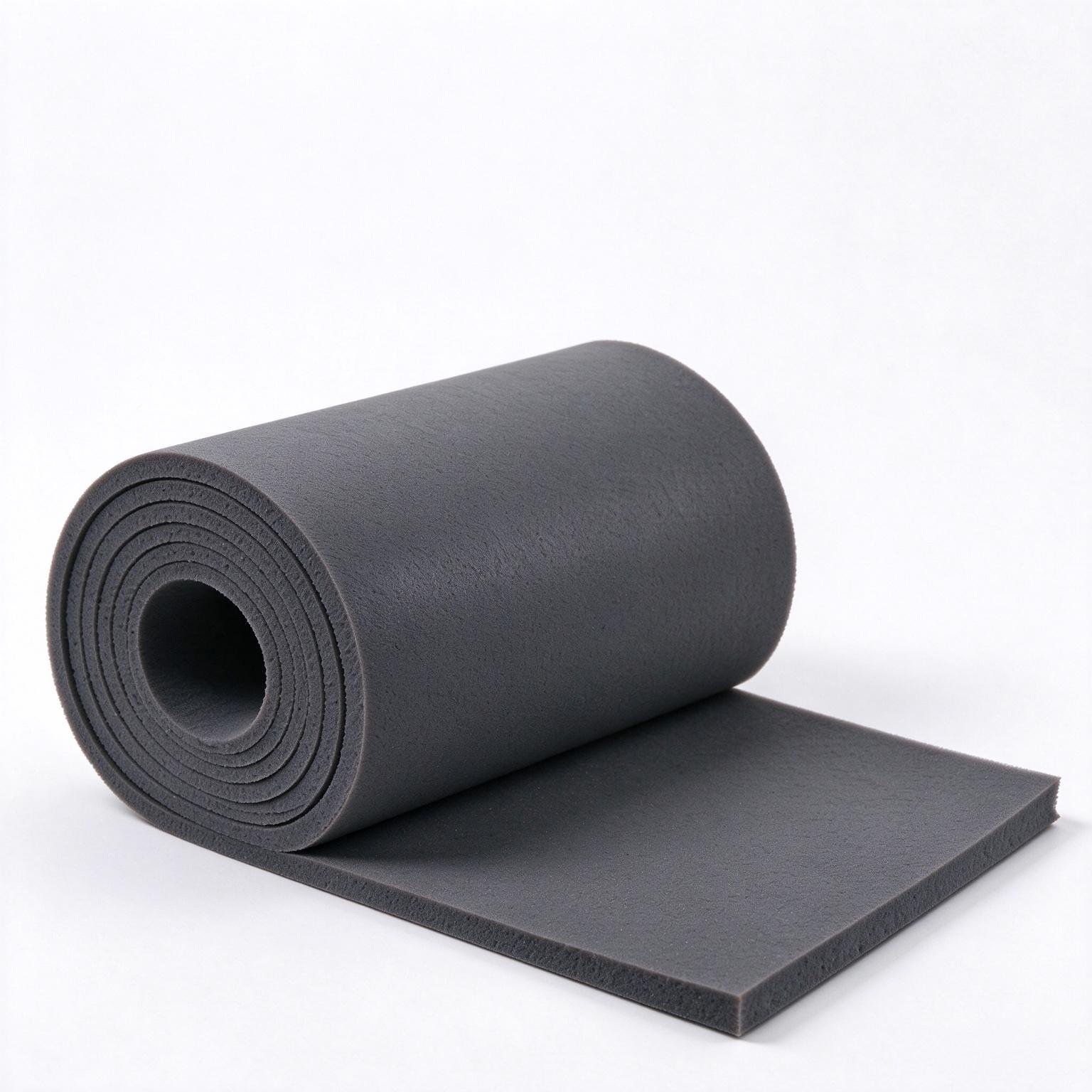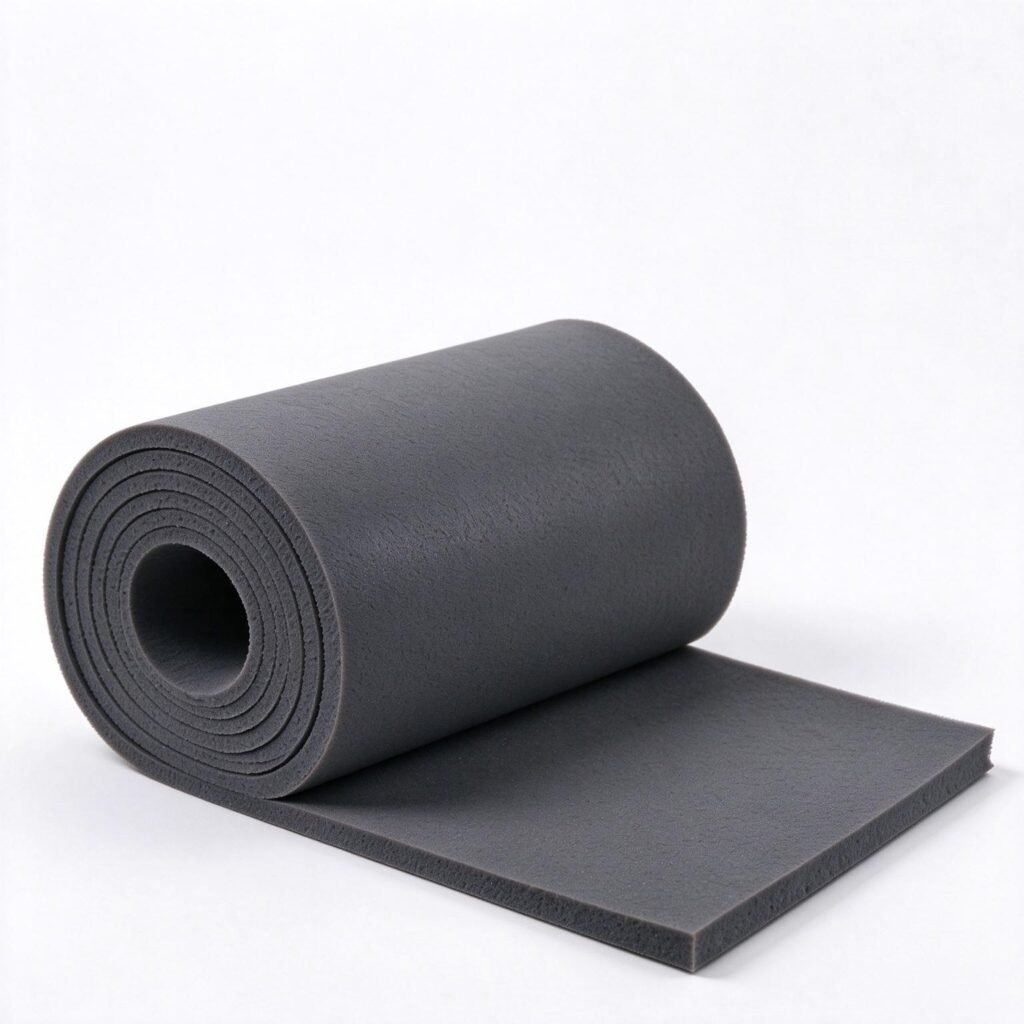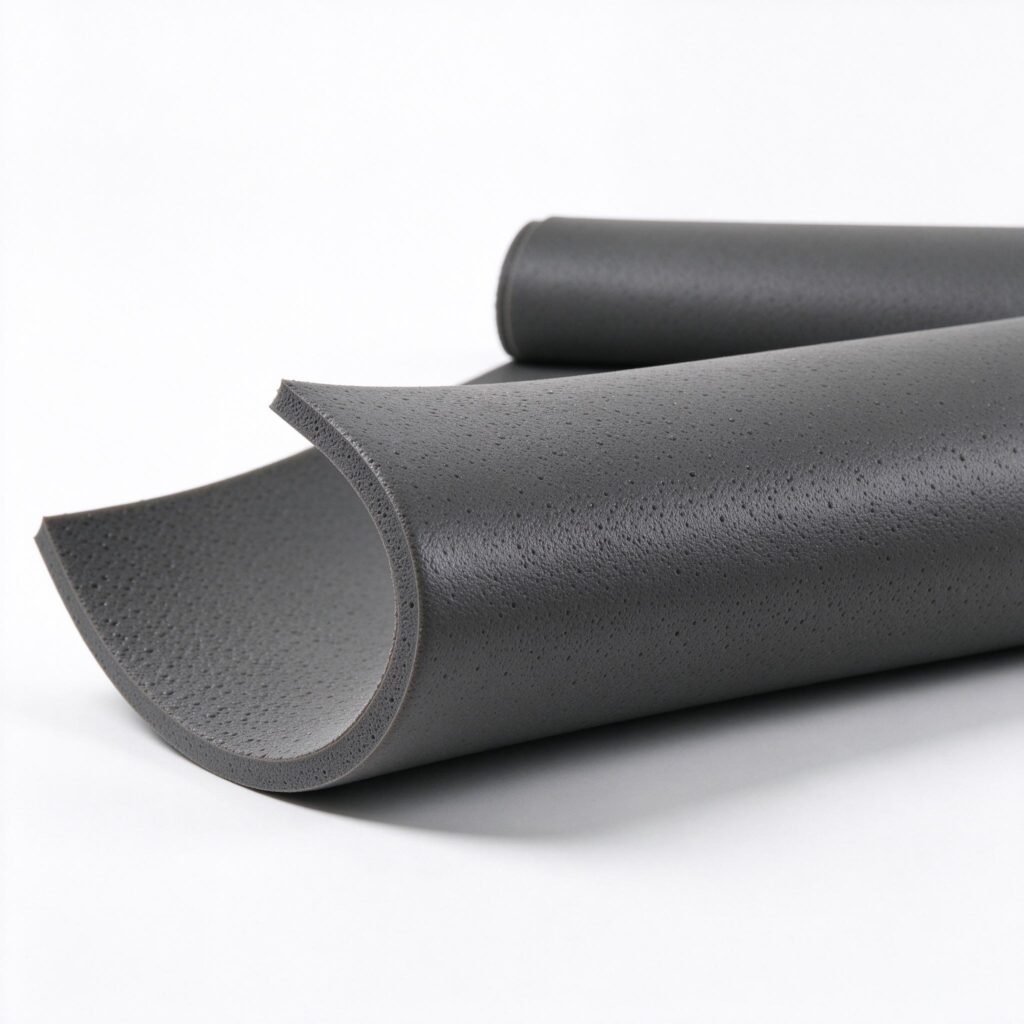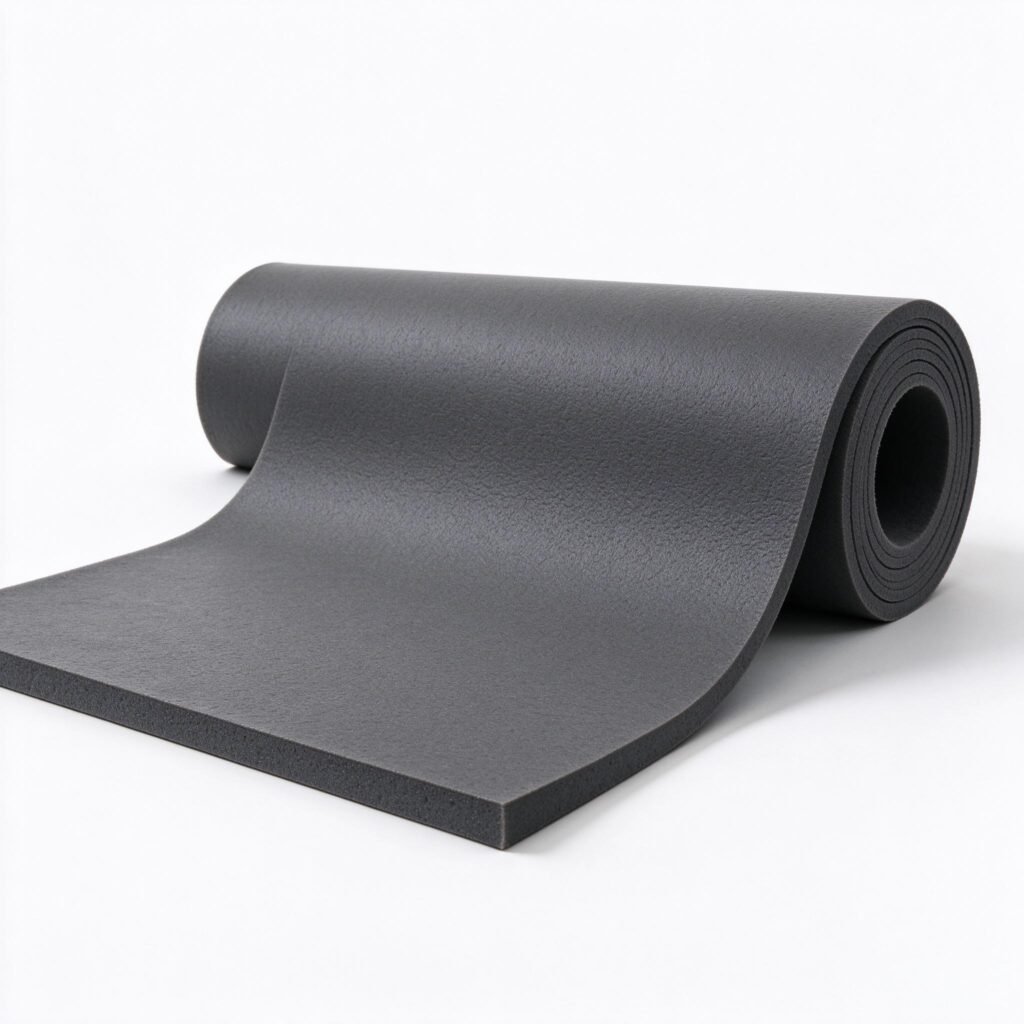
The global acoustic underlay market, in which polyethylene sound insulation mats represent a core material segment, is projected to grow from $1.70 billion in 2025 to approximately $2.58 billion by 2032, according to new market research. The forecast compound annual growth rate of 6.2% reflects sustained demand from residential and commercial construction, alongside a notable shift in material preferences: the industry is moving away from conventional cross-linked polyethylene toward next-generation recyclable formulations and higher-performance polyolefin foams.
Polyethylene sound insulation mats are resilient functional layers installed between a structural subfloor and the finished floor covering. Their primary function is to reduce impact noise—footfall, dragging furniture, and light equipment vibration—through elastic decoupling and damping, while also contributing to airborne sound insulation in certain assemblies. In 2025, global production of acoustic underlay was estimated at 300 to 450 million square meters, with mainstream ex-factory prices ranging from $3.5 to $6.0 per square meter depending on material system, thickness, and fire performance. Polyethylene is one of the principal material categories in this market, alongside recycled rubber, polyurethane foam, polyester felt, and cork composites.
Recyclability Emerges as a Technical Requirement
One of the more consequential developments in the polyethylene segment concerns end-of-life performance. Traditionally, much of the polyethylene used in acoustic underlay has been cross-linked PE, a material that offers proven acoustic performance but cannot be recycled. Italian manufacturer Edilteco announced in July 2026 a full range of acoustic insulation products based on a new generation of polyethylene combined with technical rubber compounds, designed to be fully recyclable—including versions laminated with calibrated-density polyester. The company framed the shift as a response to growing technical and environmental demands from designers and contractors, arguing that recyclability is no longer a peripheral consideration but a design criterion in its own right.
The distinction matters for the construction sector’s broader sustainability accounting. Non-recyclable cross-linked PE underlay becomes waste at the end of a building’s flooring lifecycle, whereas recyclable formulations can be recovered and reintroduced into production. Edilteco’s approach also targets improved dynamic stiffness and load resistance, addressing the persistent tension between acoustic performance and long-term mechanical stability under sustained floor loads.
Foam Suppliers Adapt to Pre-Attached Underlay Trend
A parallel development is reshaping how polyethylene acoustic layers reach the market. In the laminate and design flooring sector, there is a clear trend toward flooring elements with pre-attached acoustic underlay, driven by demands for installation efficiency, acoustic comfort, and reduced process complexity. Sekisui Alveo, a Swiss polyolefin foam specialist, announced in May 2026 that it has expanded its production capability to foam widths of up to 2.20 meters to serve this trend. The company’s PE foams—both cross-linked and non-cross-linked—are supplied with options for embossing, printing, or functional coatings, and are positioned for direct lamination into flooring production lines.
The significance of wider roll goods lies in manufacturing economics. Pre-attached underlay allows flooring producers to eliminate a separate installation step, reduce joints, and increase process reliability. As Christoph Vogel, Application Development Manager at Sekisui Alveo, noted, widths exceeding 2 meters allow complexity to be reduced and process reliability to be significantly increased. For the polyethylene mat segment, this represents a channel shift: rather than being sold primarily as a standalone retrofit product, PE acoustic layers are increasingly embedded in the flooring product itself.
North American Supply Chain Localization
In the United States, Toray Plastics (America) is emphasizing domestic production for its QuietFoam polyolefin foam underlayment line, manufactured in Front Royal, Virginia, using more than 99 percent domestically sourced raw materials. The product, available in 1 mm and 2 mm thicknesses for luxury vinyl plank, laminate, and engineered wood flooring, is positioned around supply chain reliability. Jack White, director of sales for Toray’s PEF Division, noted that factory-direct purchasing from the Virginia plant provides customers with shorter lead times and freedom from the uncertainty associated with overseas freight and tariffs.
The localization argument carries weight in a market where construction schedules are sensitive to material delays and where tariff exposure on imported building products has become less predictable. Toray’s emphasis on underlayment as an “engineered component of the complete flooring system—not simply an accessory” reflects a broader industry effort to elevate the technical status of the acoustic layer, moving it from commodity add-on to specified system element.
Outlook: Performance Tiering and System Selling
Market analysis suggests the polyethylene sound insulation mat segment is differentiating along performance lines. Basic non-cross-linked PE foams serve cost-sensitive residential and renovation applications, while cross-linked and elastomer-modified formulations target projects requiring stable long-term compression resistance, fire compliance, and verifiable acoustic ratings. The competitive center is shifting from price claims toward auditable test documentation and system-level delivery support, as suppliers recognize that real-world acoustic outcomes depend on the entire floor assembly—perimeter detailing, penetration sealing, and joint control—rather than the mat alone.
For polyethylene specifically, the commercial opportunity lies in two directions: capturing the pre-attached underlay channel as flooring manufacturers integrate acoustic layers into their products, and meeting the sustainability requirements that are increasingly written into building specifications. The 6.2% growth forecast is moderate, but it describes a market in transition—one where the material that goes underfoot is being asked to perform acoustically, last mechanically, and account for itself environmentally.